Baseball cap customization is the process of turning a cap style, fabric, color and logo into a bulk order that fits a brand, team, event or promotion. For a B2B buyer, the practical question is not only whether a cap can carry a logo, but which cap, fabric and decoration method will look right, meet the budget and arrive as approved. This guide follows the decisions in the order they usually happen: style, fabric, logo method, artwork, minimum order, sampling, production, quality control, packaging and shipping.
MAYTOO Hats is a China-based custom headwear manufacturer. Its About page states more than 10 years of OEM/ODM headwear experience, a 50-piece MOQ, 3–5 day prototyping, digital mockups within 24 hours and 100,000+ caps monthly production capacity. Those figures are company-stated starting points for a buyer conversation; every custom project still needs its own specification, quote and sample approval.
What baseball cap customization includes
A complete customization brief usually covers:
Cap silhouette and panel count
Brim shape and curve
Fabric and color
Closure type
Logo method, size and placement
Interior labels and private taping
Packaging and carton marks
Order quantity and delivery terms
Product descriptions on MAYTOO's baseball cap listings explain that custom hat pricing is determined by quantity, materials, logo craftsmanship, size and color. That is a useful checklist for the brief: if any one of those variables changes, the quote can change too.
Start with the end use, then choose the cap style
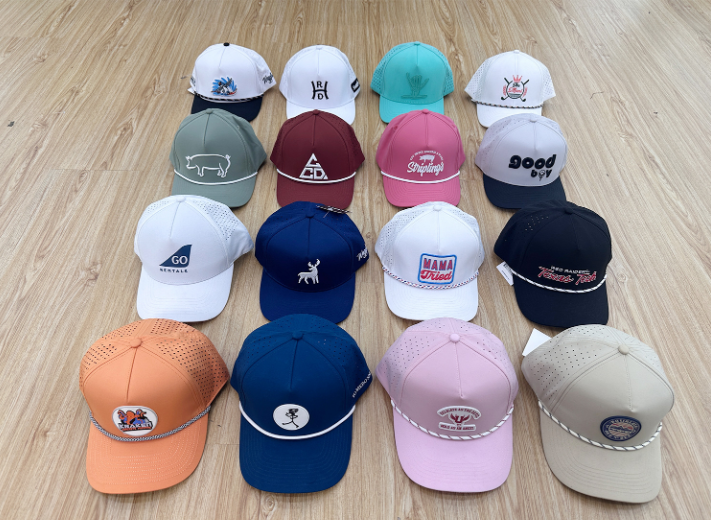
The cap style should follow the job the hat has to do. A structured six-panel cap with a curved brim is a common choice for corporate, retail and team programs because it holds its shape and gives the front panel a stable embroidery area. A five-panel cap with a flat crown suits streetwear and promotional drops. A trucker cap with a mesh back fits outdoor events, sport and retro-inspired branding. A dad cap, with its unstructured low profile, works for lifestyle and casual retail. A flat-brim cap leans toward streetwear and hip-hop styling.
For product examples, the custom 5-panel mesh trucker cap with printed or embroidered logo and the wholesale custom-logo Richardson 112 style trucker hats show how mesh-back construction is presented for bulk promotional orders. The wholesale custom logo flat baseball caps in pure cotton are listed at US$2.69 and illustrate a flat-brim, hip-hop-oriented option. If the program includes bucket hats or knit caps, compare those constructions on the custom bucket hats and custom knit hats category pages rather than forcing every use case into a baseball cap.
Choose fabric and construction for the intended use
Fabric affects hand feel, structure, breathability, colorfastness and how well the logo reads.
100% cotton twill is a common base for retail and team caps. It takes embroidery well and has a familiar, durable look.
Washed cotton has a softer, vintage finish. It suits lifestyle brands that want a broken-in appearance.
Polyester and performance fabrics are often chosen for sport and outdoor use where moisture management and color retention matter.
Mesh is used on trucker backs for ventilation and contrast.
Canvas is heavier and can give a workwear or utility feel.
A product listing such as the MOQ high-quality baseball cap with custom embroidered logo in pure cotton, listed at US$1.99, shows a cotton sports-cap route. A washed cotton baseball cap with an embroidered flag logo shows how the same general silhouette can shift toward a softer, more casual look. For a deeper fabric comparison, see the canvas vs mesh guide, which explains how fabric choice changes the look of a custom baseball cap logo.
Select a logo method that fits the artwork and the cap
The logo method should be chosen with the artwork, fabric and budget in view, not after the cap is ordered.
3D embroidery creates a raised, dimensional logo. It works best with bold shapes and a clear front panel; fine detail and tiny text may need simplifying.
Flat embroidery is versatile and durable. It handles text, compact marks and many corporate or team logos well.
Printing can reproduce multi-color graphics and finer detail. The fabric, ink and placement affect the result.
Woven or leather patches give a crisp, premium look and can be combined with embroidery.
Screen printing can be cost-effective for simple graphics and larger runs.
MAYTOO's About page lists 3D and flat embroidery, custom woven and leather patches, silk screen printing, and private inner taping and labels. The 3D embroidered logo example shows the kind of raised front-panel treatment buyers often request. For embroidery, ask the supplier to digitize the artwork and show a stitch preview before production; for print, confirm color references and how the image will sit on the fabric.
Prepare artwork and approve a mockup
Good customization starts with usable artwork. A vector file such as AI, EPS or PDF is the most flexible starting point; a high-resolution PNG can be used as a visual reference but may not be enough for clean reproduction. The brief should state cap color, logo color references, logo width and height, placement, and any text that must remain legible.
MAYTOO's About page states that standard digital mockups are delivered within 24 hours and prototyping takes 3–5 days. Buyers should use that stage to check proportion, placement and color, then approve a physical sample before bulk production. A mockup is not a substitute for a sample: it confirms direction, while the sample confirms fabric, fit, stitch or print quality and the actual logo result.
Understand MOQ, pricing and what drives cost
MOQ is one of the first filters in a B2B customization project. MAYTOO's About page lists a 50-piece friendly MOQ intended to support apparel startups, streetwear brands and corporate events. The actual minimum can still depend on the cap style, fabric, logo method and color combination, so confirm it for the exact build rather than assuming one number applies to every SKU. For a closer look at how a 50-piece run is positioned, see the 50-piece minimum order article.
Pricing is not a single number attached to a cap style. Product descriptions on the baseball cap listings state that price depends on quantity, materials, logo craftsmanship, size and color. As examples, the customized advertising gift baseball cap with embroidered or printed logo and sandwich brim is listed at US$1.99; the MOQ high-quality pure cotton sports cap with custom embroidered logo is also listed at US$1.99; and the wholesale custom logo flat baseball cap in pure cotton is listed at US$2.69. These are listed starting prices, not a final quote for every order. Ask for an itemized quotation that separates the cap, decoration, sample, packaging and shipping so the cost drivers are visible.
Cost driver
Why it matters
What to ask
Quantity
Setup and production are spread across the run
What is the MOQ for this style, color and logo method?
Fabric
Changes hand feel, structure and cost
Which fabric is standard, and what are the alternatives?
Logo method
Embroidery, print, patch and screen print use different processes
Which method suits this artwork at this size?
Logo size and stitch count
More stitches or larger prints take more time
Is there a price break by logo size or stitch count?
Cap color and color count
Custom colors and multiple colors affect material planning
Are stock colors available, or is custom dyeing required?
Packaging and labels
Private labels, inner tape and cartons add steps
What is included, and what is quoted separately?
Plan sampling, production and quality control
After the mockup, the sample is the buyer's main approval point. Check the cap size and fit, fabric hand feel, color against the approved reference, brim shape, closure, logo placement, stitch density or print edge, and the interior labels. Record any correction in writing before bulk production.
For production, MAYTOO's About page states 100,000+ caps monthly capacity and Japanese Barudan/Tajima automatic embroidery machines. It also describes a 100% QC workflow from raw fabric inspection to final trimming and shaping before packing. Buyers should ask what is checked, who signs off, and whether pre-packing photos are available. A clear QC checklist reduces the risk of discovering a placement or color issue after the cartons are sealed.
Confirm packaging, labels and shipping terms
Packaging is part of the specification, especially for retail and promotional programs. MAYTOO's About page states that 25 hats go into one PP bag, usually 100 hats per carton, with a standard carton size of 40x40x40cm/10kg. The same page lists private inner taping and labels as branding options. Confirm whether hang tags, polybag labels, carton marks or retail-ready packing are needed, and whether they change the MOQ or unit cost.
On shipping, the About page lists FOB, CIF and DDP terms and says shipments can be managed by DHL, FedEx, air or sea freight. The right term depends on the buyer's experience and destination. DDP can simplify door-to-door delivery with duties paid, while FOB or CIF may suit buyers with their own freight forwarder. Always confirm the Incoterm, loading port, estimated transit time and what is included in the price before approving the order.
How to choose a baseball cap customization supplier
Use the same questions for every supplier so the answers are comparable:
What is the MOQ for my exact cap, fabric, color and logo method?
Is embroidery done in-house, and which machines are used?
What does the sampling process include, and how long does approval take?
Which logo methods do you recommend for this artwork, and why?
What QC steps happen before packing, and what evidence can you share?
What packaging, labels and carton marks are included?
Which trade terms and shipping methods do you support?
Who handles communication, and what is the response window?
Choosing a cap style before defining the end use and audience.
Sending a raster logo with tiny text for embroidery without a stitch preview.
Treating a listed starting price as the final delivered cost.
Skipping a physical sample or approving it without checking placement and color.
Forgetting to specify labels, packaging and carton marks.
Comparing suppliers on unit price alone without comparing MOQ, QC and shipping terms.
Assuming one color reference will match across fabric, thread and print without approval.
FAQ
What is the minimum order for custom baseball caps?
MAYTOO's About page lists a 50-piece friendly MOQ. The exact minimum can vary by cap style, fabric, color and logo method, so confirm it for your specification before ordering.
How long does sampling take?
The About page states 3–5 day prototyping and digital mockups within 24 hours. Bulk production timing depends on quantity, material and logo method; ask for a production schedule with the quote.
Which logo methods can I use?
The About page lists 3D and flat embroidery, custom woven and leather patches, silk screen printing, and private inner taping and labels. The best method depends on artwork detail, logo size, fabric and budget.
What drives the price of a custom baseball cap?
Product descriptions state that price depends on quantity, materials, logo craftsmanship, size and color. Listed examples include US$1.99 for a customized advertising gift baseball cap with embroidered or printed logo and sandwich brim, and US$2.69 for wholesale custom logo flat baseball caps in pure cotton. Treat these as starting references and request an itemized quote.
Can I add private labels and custom packaging?
The About page lists private inner taping and labels. Packaging is stated as 25 hats per PP bag, usually 100 hats per carton at 40x40x40cm/10kg. Confirm any additional hang tags, labels or carton marks with the supplier.
What artwork should I send?
Send a vector file such as AI, EPS or PDF when possible, plus a high-resolution reference image and color details. For embroidery, ask for a digitized stitch preview; for print, confirm how fine detail and color will reproduce on the chosen fabric.
How do I contact MAYTOO Hats?
The contact page lists phone and WhatsApp at 86-13913220983, office hours 9:00am–5:00pm Monday–Friday, and an address in Kunshan City, Suzhou, Jiangsu Province. Send the cap style, quantity, logo file and target date to request a quote.
Next step
Start with a clear brief: cap style, fabric, color, logo file, logo method preference, quantity, packaging and target delivery date. Browse the shop for baseball caps, trucker caps and other custom headwear, then send the specification through the contact page. If you are still choosing between cap types, the bucket hat and knit hat category pages show how the same customization logic applies to other silhouettes.
Learn how baseball cap customization works for bulk buyers: cap styles, fabrics, logo methods, artwork, MOQ, pricing factors, sampling, QC and shipping.
Authentic licensed caps cost more because the price includes brand permission, royalties, approval, materials, QC, compliance, and authorized retail. Here is the cost breakdown, plus how legal custom hats from China compare.
Manufacturing origin affects fabric access, logo quality, MOQ, QC, and logistics—but it is not a quality label. Use this checklist to compare cap suppliers.
What does "hat canvas" mean for a custom cap? See how heavyweight canvas, performance mesh, and cotton twill change embroidery, patches, and printed logos.